September 24, 2026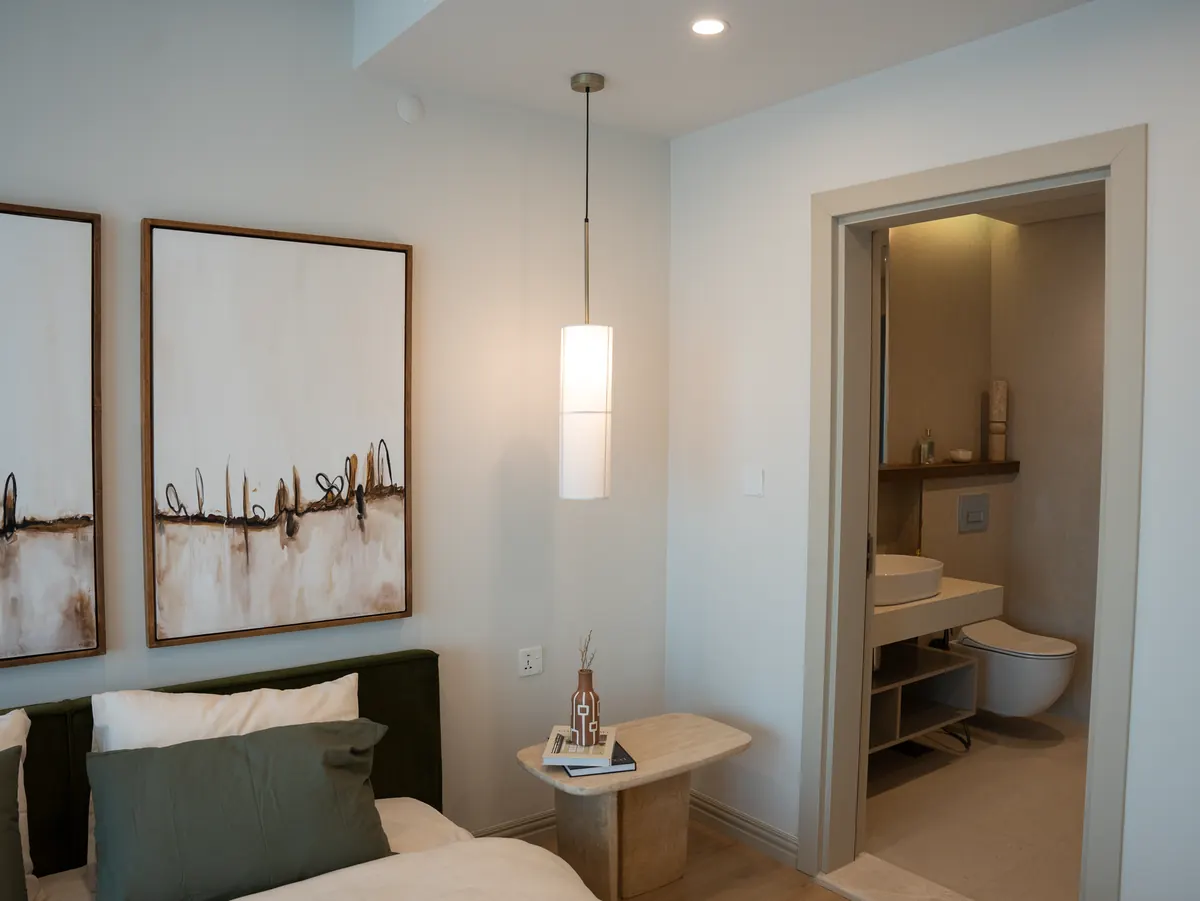
A glazed stoneware shade looks the same whether it sits on a nightstand or hangs from a ceiling rose. The light it makes does not. Lift the same clay body a metre and a half and it stops being a pool of light at your elbow and becomes a wash across the room — brightest at the rim, softer underneath, with the ceiling as its backdrop.
The choice between a ceramic table lamp and a ceramic pendant light is rarely about which one you like more. It is about where the light has to land, how much space the fixture can occupy, and how much work you are willing to do to get it up there.
Where Should the Light Actually Land?
Start with the task, not the fixture. Ask what the light needs to reach at seven in the evening.
A table lamp sits at roughly the eye level of a seated person and throws light sideways and down. That makes it excellent for reading, writing, a jigsaw, a bedside novel, or warming a corner without brightening the whole room. The zone it lights is about as wide as a small side table. That is a feature, not a limitation: a pool of light beside a sofa tells people where to sit.
A pendant hangs above the surface or the walkway and sends light downward. It is the right answer over a dining table, a kitchen island, a hallway, or a bed that has no nightstand.
The old rule still holds: light should arrive from the direction of the task. Reading at night means light falling from the side onto the page. Eating means light from above, so the table glows and faces are lit rather than silhouetted.
Scale, Height and Proportion
Pendants are judged from across the room; table lamps are judged at arm's length. That changes the numbers you care about.
For a pendant over a dining table, a shade diameter roughly one-third to one-half the table's width keeps things in proportion, and the bottom edge usually sits about 30 to 36 inches above the tabletop — high enough to see across, low enough to light the plates. Drop it lower and it becomes a sculpture; raise it and it turns into general light. Over a kitchen island the same range works, though a little extra height keeps sightlines open.
For a table lamp, the bottom of the shade should land near eye level when you are seated beside it. That hides the bulb and pushes light down onto your book instead of into your eyes. Measure your own shoulder height before you buy.
A two-minute test
Cut a paper circle to the pendant shade's diameter and tape it to the ceiling where the fixture would hang. Tie a length of string from the ceiling to mark the bottom edge. Sit down and look. Most pendant mistakes are made in the shop, not at home.
How Ceramic Changes the Spread of Light
Here is the difference that matters most and gets discussed least: an opaque ceramic shade does not glow the way fabric or paper does. A linen drum shade lights a room evenly. A fired stoneware shade blocks most of the light and releases it through the opening, which creates contrast — a bright rim, a dark body, sharper shadows on the wall.
Some thinly thrown porcelain will pass a soft glow through the wall when the bulb is on. Thick stoneware will not. Neither is better; they are different tools.
If you want a ceramic pendant to light a whole room
- Choose a wide bottom opening rather than a narrow neck.
- Look for pierced, carved or drilled bodies that let light escape sideways.
- Ask the maker whether a translucent inner diffuser is available.
- Plan a second source — a wall light or floor lamp — for the rest of the room.
- Use a dimmable bulb, and check that the bulb and switch are compatible, or the dimmer will hum and flicker.
Installation: The Real Difference
A table lamp goes on a surface and plugs into an outlet. That is the whole job, unless you want the outlet switched, in which case an electrician can sort it out.
A pendant needs a ceiling connection, and ceramic is heavy. Work through these before you order:
- Confirm a ceiling box exists where you want the fixture, and that it is rated for the weight. A ceramic shade can weigh several times what a fabric one does.
- Measure the ceiling height and settle the drop length before you buy, not after it is hanging.
- Decide the switching. Bedside pendants often want separate control so one person can read while the other sleeps.
- If the job means hardwiring, opening a box or touching a circuit, hire a licensed electrician and check your local requirements. In a rental, get written permission first.
- Have someone hold the fixture while you make the connections. Two hands are not enough.
A plug-in swag pendant avoids most of this and suits renters well, as long as you can live with where the cord runs.
Style and Presence
Ceramic behaves differently depending on where it sits in your field of view. Up high, the glaze becomes the subject: the silhouette against the ceiling, the rolled rim, the ridge left by the potter's fingers, the way the underside catches light. Down low, you notice texture at close range and how the piece feels when you nudge it toward the switch.
A matched pair of table lamps gives a room symmetry and calm. A single pendant gives it a centre. Pendants are fixed, so choose one you will still enjoy in five years; table lamps can move from bedroom to hallway, which makes them the safer buy when you are unsure.
Room by Room: Which One Wins
- Bedroom with nightstands: table lamps, ideally a pair at the same height.
- Bedroom without nightstands: pendants hung just above shoulder height when seated, on separate switches.
- Dining room: a pendant over the table; table lamps belong on the sideboard.
- Kitchen island: two or three small pendants, spaced evenly and hung higher than you think.
- Living room: usually both — a pendant or flush fitting for general light, table lamps for reading and mood.
- Hallway or stairwell: a pendant, well above the sightline so nobody walks into it.
- Rental: table lamps and plug-in pendants, no ceiling surgery.
How to Decide Without Guessing
Live with a mock-up for a day. Tape the paper circle to the ceiling, hang the string, then sit at the table and check whether the fixture blocks your view of the person opposite. For a table lamp, stack books under an existing lamp until the shade bottom meets your eye line, and buy that height rather than the height in the photograph.
If a room genuinely needs both kinds of light, split the job: let the pendant handle the fixed, central glow and let the table lamp handle everything you need to move — reading, sewing, late-night work. Two ceramics from the same glaze family will sit together happily, so you do not have to choose one style and stop there.
Photo: Ansar Muhammad / Pexels