September 23, 2026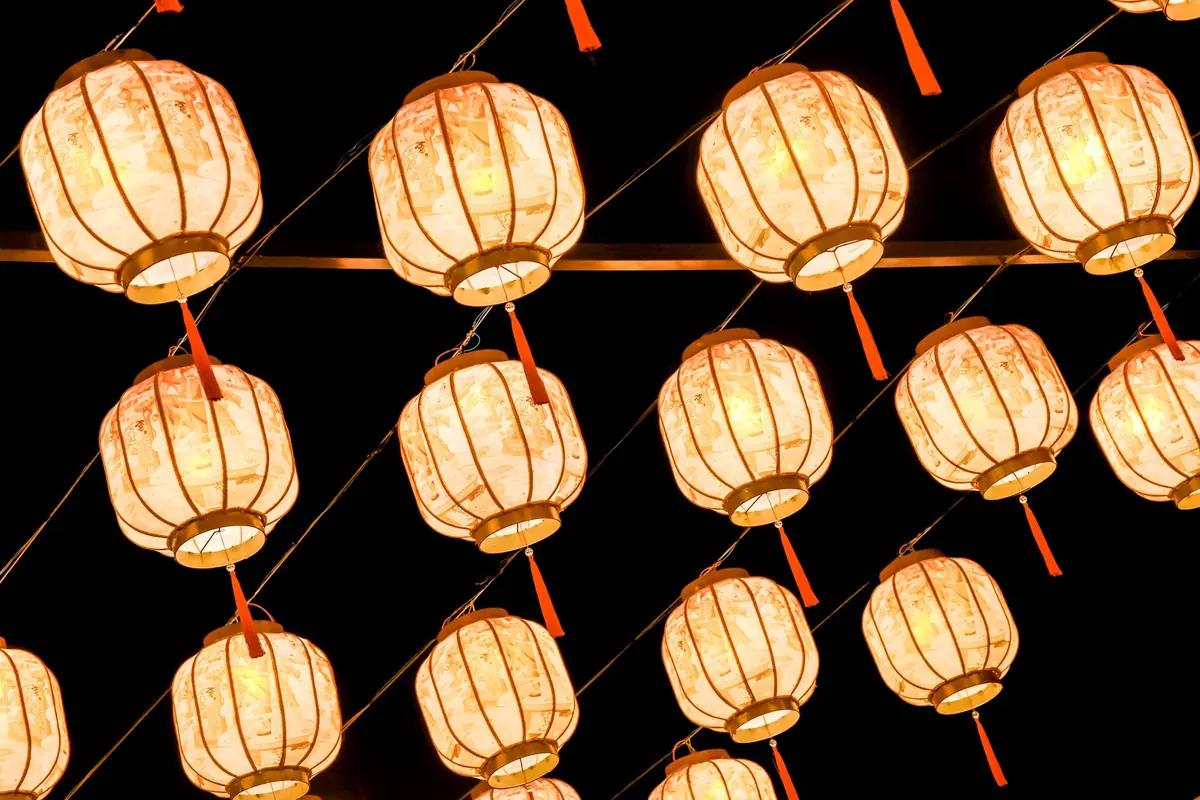
Put the same bulb into two ceramic lanterns and you would expect the same light. You rarely get it. One glows softly through the walls, as if the fire were suspended inside the clay itself. The other reads as a dark silhouette with a few bright slots cut into it. Neither lantern is faulty. The clay, the wall, the glaze, and the bulb are simply working as a system, and that system has more variables than most people expect.
Understanding those variables takes the guesswork out of buying, and it makes the difference between a lantern that lights a corner and one that changes the mood of a room.
The Clay Body Sets the Baseline
Translucency begins with what the clay is made of. Porcelain, with its high kaolin content and low iron, fires into a dense, glassy body that passes light when the wall is thin. This is why a porcelain shade only a few millimetres thick can read almost like frosted glass, with the light seeming to come from the material rather than from a bulb behind it.
Stoneware is usually the opposite. Most stoneware carries iron and other colorants that absorb light, and even a well-vitrified stoneware wall tends to block transmission rather than pass it. The same goes for earthenware and terracotta, which also need thicker walls for structural strength at lower firing temperatures. A terracotta lantern with 12 mm walls will always be a mask for light, not a diffuser of it, no matter what bulb you use.
If a glowing body is what you want, look for porcelain or a pale, highly vitrified stoneware, and ask how thick the walls are. If you want strong silhouettes, carved patterns, and warm earthy tones, iron-bearing clay is the right choice.
Wall Thickness Controls How Light Travels
Thickness is the variable most makers can actually control, and it changes the character of the light more than glaze does.
Thin walls, roughly 3 to 6 mm
Light passes through the body. You get an even, diffuse glow with no visible hot spot, and the light picks up the color of the clay on the way through. Thin porcelain reads creamy; thin stoneware reads amber or brown. The trade-off is fragility and heat. Thin walls also show every inconsistency, so an uneven throw or a thick foot ring becomes a dark patch in an otherwise even glow.
Thick walls, roughly 8 mm and up
Direct transmission drops off steeply as walls thicken. A thick lantern behaves like a solid object with apertures: the light comes from the openings, the rim glow, and the reflection off nearby surfaces. That is not a failure. It is a different design language, and it is why pierced and carved lanterns are usually built thick.
- Evenness matters more than thinness. A consistent 6 mm wall glows better than a wall ranging from 3 mm to 9 mm, which will show bright stripes and dark bands.
- The base and lid count too. A heavy foot and tight lid trap light at the top and bottom, concentrating it in the middle band of the lantern.
- Check inside, not just outside. Run a finger around the interior. Ridges and dribbles of glaze create shadow lines you will see once the bulb is lit.
Glaze: Surface, Tint, and the Interior You Rarely See
A glossy clear glaze gives crisp specular highlights and a slightly sparkly quality, because the smooth surface bounces light in a narrow direction. Satin and matte glazes scatter that reflection into a soft, even wash. Opaque white glaze diffuses light at the surface, which produces the most uniform glow available from a ceramic lantern and hides uneven clay underneath. Celadons, ash glazes, and copper reds absorb part of the spectrum, tinting the light that passes or reflects. Crystalline glazes break the surface into small bright points.
The interior finish is the part most people overlook. A matte white interior bounces light back out through the walls and openings; a dark, glossy interior sends it down onto whatever sits beneath the lantern. If you are commissioning a piece, specify the inside. It is cheap to change and hard to change later.
Bulb Color and Spectrum: What the Clay Does With It
Bulb temperature is measured in kelvin, and lower numbers are warmer. Candle-style bulbs sit around 1800 to 2200 K, warm white around 2700 K, neutral around 3500 K, and daylight near 5000 K.
Two rules cover most situations. First, warm bulbs and warm clay reinforce each other. A dark amber glaze lit at 2200 K will look rich and deep, but a pale porcelain lantern lit the same way may look dingy, because there is no contrast left. Second, cool bulbs dramatise warm clay. A 4000 K bulb behind terracotta gives a crisp, almost chalky contrast that suits a modern interior and looks wrong in a bedroom.
Spectrum matters as much as temperature. Filament bulbs emit a continuous spectrum that flatters earthy glazes. Many inexpensive LEDs spike in the blue, which can grey out a warm brown glaze or push a green celadon toward grey-green. Look for a colour rendering index above 90, and test a bulb in the actual lantern before buying several of them.
Openings, Double Walls, and Linings
Cut openings turn the lantern from a diffuser into a projector. The pattern lands on the wall behind it, the density of the rim glow depends on how close the cuts are to the light source, and the shape of the openings matters more than the clay body. A pierced lantern made of porcelain and one made of stoneware will look surprisingly similar at night.
Double-walled lanterns add an air gap between two shells, which softens the light further and insulates the outer wall. A lining of mica or handmade paper inside a matte lantern smooths the output and warms the tone without changing the outside. Raising or lowering the bulb inside the lantern shifts the glow up and down the wall, which is often the cheapest way to change the effect.
Heat and Flicker: Small Details You Will Notice at Night
Ceramic holds heat. An almost fully enclosed lantern with an incandescent bulb inside becomes a small oven, which stresses glaze and wiring over time. Use an LED bulb, keep the wattage modest, and give the lantern a way to breathe: a small vent at the top and bottom, or a lid that sits slightly raised. Check that the socket and cord are rated for the bulb and installation you have in mind. For hardwired or outdoor fittings, have a qualified electrician confirm the enclosure and wiring.
Flicker is the other quiet problem. Some dimmable LEDs flicker at low settings in a way you cannot see in a thick-walled lantern but can clearly see through a thin translucent wall, where it reads as a faint strobe. If your lantern is thin porcelain, test the dimmer at the lowest setting you plan to use.
Choose by Testing at Night
Daylight hides everything that matters here. Before you commit, do this:
- Set the lantern on a table in a dark room and light it with the bulb you intend to use.
- Try two or three bulbs at different colour temperatures and watch how the glaze colour changes.
- Move the bulb up and down inside the lantern, if the fixture allows, and note where the light falls.
- Stand a sheet of white paper a handspan behind the lantern to see the pattern and colour of the cast light.
- Dim to your usual evening level and look for flicker, hot spots, and uneven wall glow.
Write down the combination that worked. Clay body, wall thickness, glaze inside and out, bulb temperature, and bulb position are five separate dials, and the lanterns that feel right are almost always the ones where all five were chosen together rather than one at a time.
Photo: 浪 郭 / Pexels